
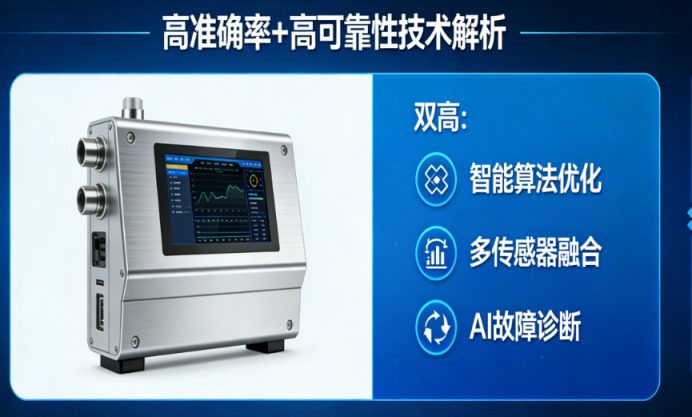
This article will focus on the core advantages of “high precision and high reliability” of the new generation of live detection equipment, and explain in simple terms how it overcomes the pain points of false alarms and missed alarms in traditional live detection equipment. Combined with the actual case of Shaanxi RenheSheng, it will detail the “double high” secrets of the new generation of live detection equipment to help enterprises get rid of the troubles of false alarms and missed alarms, accurately identify hidden dangers, and improve the quality of operation and maintenance.
In the field of live detection, false positives and false negatives are core pain points for many companies. Traditional live detection equipment, due to backward technology and weak anti-interference capabilities, often mistakes environmental interference signals for equipment hazards, resulting in false alarms that exhaust maintenance personnel. At the same time, insufficient detection accuracy can lead to the omission of subtle equipment hazards, causing further damage and huge economic losses. However, the new generation of live detection equipment, with its “dual high” advantages of “high precision and high reliability,” completely eliminates the troubles of false positives and false negatives, making live detection more accurate and reliable, thus becoming the “reliable choice” for enterprise operations and maintenance.
To bid farewell to false positives and false negatives, we must first understand the root causes of these issues in traditional live detection equipment, which mainly stem from three aspects: First, low detection accuracy. The sensors in traditional equipment have insufficient sensitivity and cannot capture subtle hidden dangers in equipment, such as weak partial discharge signals, leading to false negatives. Second, weak anti-interference capability. The electromagnetic interference and environmental noise present on-site can be mistaken as danger signals by traditional equipment, resulting in false positives. Third, poor data analysis capability. Traditional equipment can only collect data, but cannot accurately analyze it, making it unable to distinguish between interference signals and actual danger signals, further exacerbating the problems of false positives and false negatives.
These issues not only affect the efficiency of live-line detection but also lead many companies to question live-line detection equipment, even to abandon its use. This ultimately results in equipment hidden dangers not being discovered in a timely manner, leading to failures. The new generation of live-line detection equipment addresses these pain points by creating core advantages of “high precision and high reliability,” thoroughly solving the problems of false positives and false negatives.
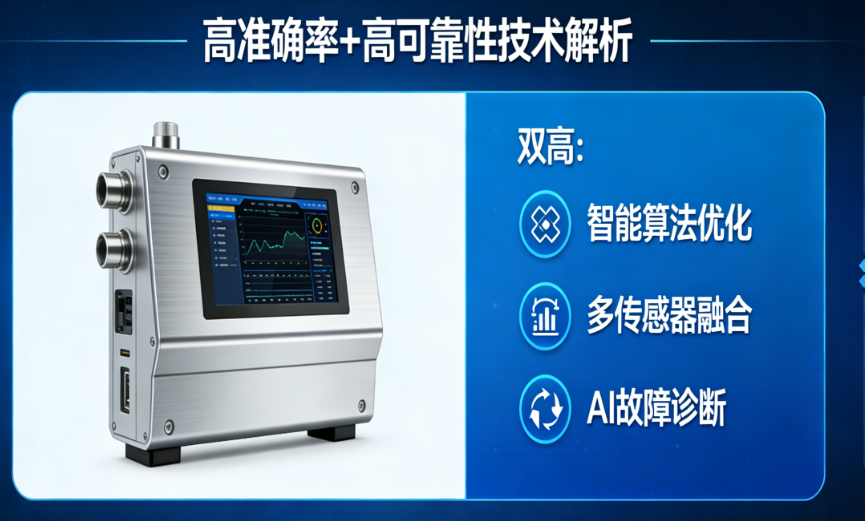
The “dual high” of the new generation of live detection equipment, “high precision” and “high reliability,” complement each other to ensure the accuracy and stability of live detection. Its core secrets are mainly reflected in three aspects, which are easy to understand and grasp at a glance.
Secret 1: High-precision sensors capture subtle hidden dangers. The new generation of live detection equipment is equipped with imported high-precision sensors, with a sensitivity improvement of over 50%compared to traditional equipment. It can capture weak partial discharge signals as low as 2pC, acting like a “high-sensitivity stethoscope” for the equipment. Even subtle early-stage hidden dangers can be accurately captured, completely eliminating false negatives. At the same time, the sensor's detection range is wider, covering all parts of the equipment and avoiding blind spots.
Secret 2: Intelligent anti-interference technology to eliminate false positives. To address on-site interference issues, the new generation of live detection equipment adopts multiple intelligent anti-interference technologies. The hardware has a built-in band-pass filter that focuses on the common frequency bands of discharge signals, filtering out environmental interference. The software utilizes algorithms such as pulse grouping and periodic pulse removal to accurately distinguish between genuine hidden danger signals and environmental interference signals, reducing the false alarm rate to below 1%. This frees up maintenance personnel from being bothered by invalid alarms and allows them to focus on addressing real hazards.
Secret Three: AI Data Analysis for Enhanced Reliability. The new generation of live-line detection equipment features a built-in AI data analysis module that can perform real-time analysis, filtering, and comparison of acquired massive data. By combining historical data and operating patterns of the equipment, it can accurately assess the authenticity and severity of potential hazards. Simultaneously, it can automatically generate inspection reports, providing maintenance personnel with precise decision-making support, further enhancing the reliability of live-line detection and avoiding false positives and negatives.
Shaanxi Renhe Shensheng, a recently established company, is deeply involved in the field of live-line testing. Their new generation of live-line testing equipment, with its “dual high” advantages, has helped several local enterprises solve the problems of false positives and false negatives, demonstrating the equipment's reliability through practical cases.
A certain new energy power station in Shaanxi previously used traditional live detection equipment, which frequently resulted in false positives and missed detections. False alarms exceeded 20 times per month, leading to maintenance personnel spending a significant amount of time investigating invalid alerts. This, in turn, caused them to miss actual equipment hazards. On one occasion, a missed detection of a partial discharge hazard led to equipment failure and downtime, resulting in losses of nearly 50,000 yuan. Subsequently, the power station introduced Shaanxi RenheSheng's new generation of live detection equipment. This equipment is equipped with high-precision sensors and intelligent anti-interference technology, enabling it to accurately distinguish between interference signals and genuine hazard signals.
After being put into operation, the number of false positives in live detection at the station decreased to less than once a month, with a 0% miss rate, and the work efficiency of O&M personnel increased by over 70%%; meanwhile, the equipment accurately detected two early partial discharge risks, and timely handling of these risks avoided equipment failure and downtime, reducing economic losses by more than 40,000 yuan per month. Shaanxi RenheSheng's technical team also optimized the equipment's data analysis algorithms based on the actual needs of the station, making the equipment more suitable for the operating scenarios of new energy stations, further improving detection accuracy and reliability.
For businesses, the core value of live-line detection equipment lies in “precisely identifying potential hazards,” and the “dual high” advantages of next-generation live-line detection equipment are key to realizing this value. Bidding farewell to false positives and missed detections not only improves O&M efficiency but also prevents hazards from escalating and reduces economic losses. This is also the core reason why next-generation live-line detection equipment is replacing traditional equipment. Shaanxi Renhe Sheng has rapidly risen in the industry precisely because of this advantage.
This article is byShaanxi Renhe ShengEdited and published by the editor